Digitalized cardiovascular patient onboarding for improved accessibility

Role

Product Designer

Collaborators

CTO, Engr. Team, Researcher

Overview

Noah Labs' cardiovascular monitoring platform had a 13-step onboarding process that took weeks to complete. Patients with heart failure and atrial fibrillation—typically older adults with limited tech experience—were dropping out before receiving life-saving remote monitoring. The complex workflow involving contracts, device setup, and multiple stakeholders was failing the very people who needed care most urgently. Context: Noah Labs provides telemonitoring for cardiovascular patients through clinical partnerships with Charité Berlin, Mayo Clinic, and other leading institutions. Their ISO 13485-certified platform helps patients live longer, healthier lives—if they can get through onboarding.

The Challenge

The existing process was a bureaucratic nightmare. 3-Step Patient Journey: GP identifies suitable patient → 2. GP explains service → 3. Patient agrees → 4. GP requests contract → 5. Patient visits office to sign → 6. GP contacts Noah Labs → 7. Noah Labs creates patient account → 8. GP receives details → 9. GP calls patient → 10. Patient downloads app → 11. Noah Labs activates monitoring → 12. Devices shipped → 13. Patient sets up devices (often requiring help) Result: Weeks of delays, patient churn, and frustrated healthcare providers managing complex logistics instead of patient care.

Research Insights

Working within medical device research ethics protocols, I conducted stakeholder interviews and analyzed user journey friction points. Patient Pain Points: - Older adults need "simplicity, clarity, and familiarity" with "larger text sizes, clear instructions, intuitive navigation" - Contract signing required in-person visits, creating scheduling bottlenecks - Device setup overwhelmed patients unfamiliar with connected health technology GP Frustrations: - Administrative overhead took focus away from patient care - Multiple touchpoints created opportunities for process breakdown - Delayed activation meant delayed patient benefits

App Modal
App Modal
App Modal
App Modal Zoom
App Modal Zoom
App Modal Zoom

Key Design Decisions

Accessibility-First Approach: Applied elderly UX principles including large-sized legible fonts, clear visual hierarchy, and prominent CTA buttons to accommodate patients with varying tech comfort levels. Progressive Disclosure: Broke complex medical onboarding into digestible steps with clear progress indicators and the ability to save/resume progress. Multi-Modal Support: Designed for digital completion with fallback options (phone support, caregiver assistance) recognizing the diverse needs of cardiovascular patients.

The Solution

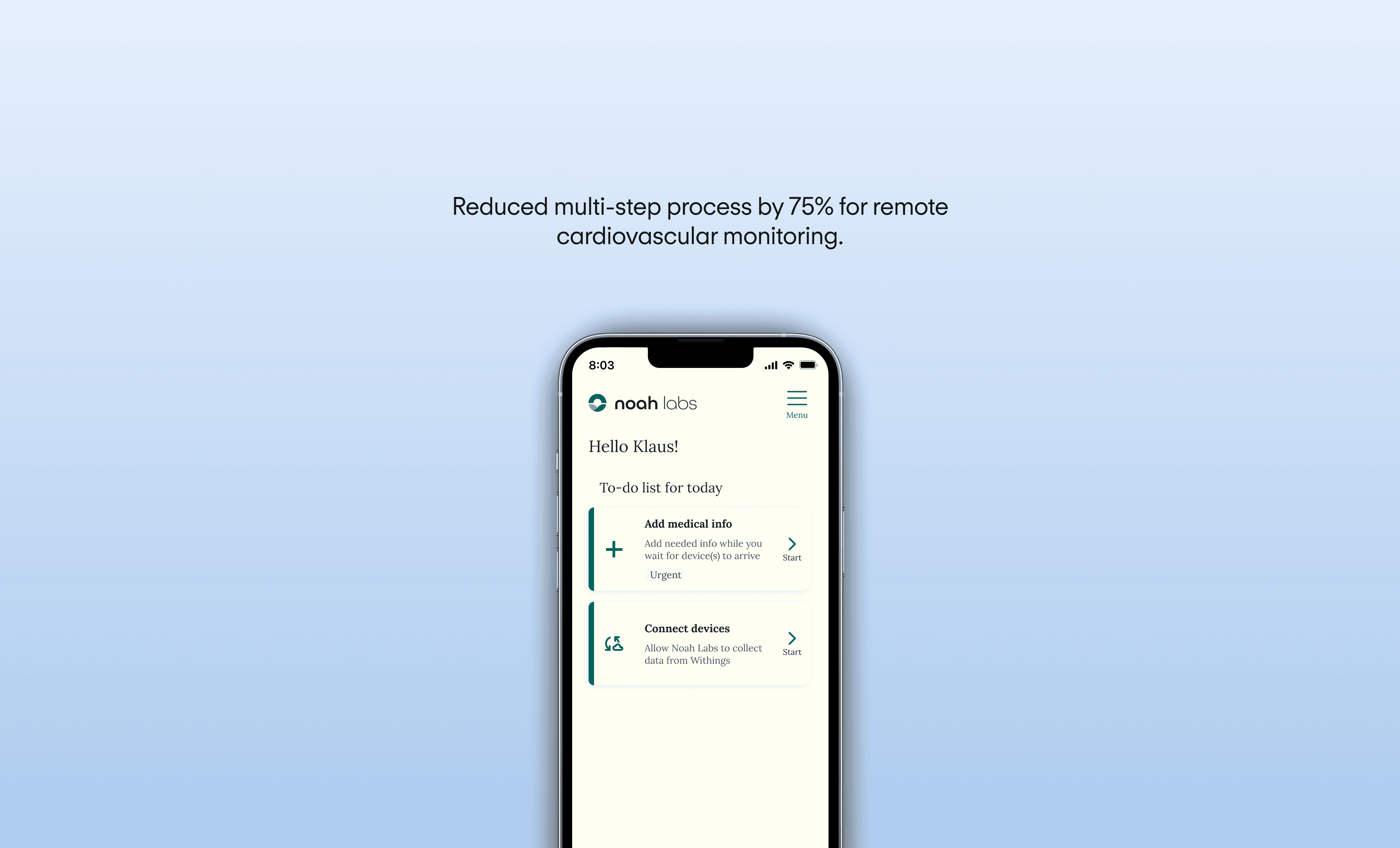
I designed a streamlined digital-first onboarding that reduced patient journey from weeks to 2-3 days while maintaining medical compliance and accessibility. Streamlined Flow Design 1, Digital Contract & Consent Replaced in-person signing with secure digital consent process, including video explanations for complex medical terms and easy-to-understand privacy agreements. 2, Automated Device Provisioning Integrated device ordering directly into patient activation, eliminating manual coordination between Noah Labs, GPs, and patients. 3, Guided Setup Experience Created step-by-step device pairing with video tutorials, remote support options, and caregiver involvement features for patients needing assistance. 4, Validation Approach Following industry guidance on patient engagement in medical device studies, we tested concepts through: - GP Partner Feedback: Validated workflow with pilot program physicians - Patient Advocacy Groups: Ensured accessibility and comprehension - Compliance Review: Maintained GDPR and medical device regulation adherence
Large Project Gallery Image #3

Projected Improvements

This design sprint was conducted while the Noah Labs Ark product was still in pilot phase, hence implementation wasn't done until after I left the company. However, we anticipated the following impact: - 75% reduction in onboarding time (weeks → 2-3 days) - Elimination of 7+ manual touchpoints between GPs, patients and the care team - Improvement of patient activation rates through accessible design patterns - Reduction in GP administrative burden - Faster time-to-monitoring, to enable earlier intervention for high-risk patients What I Learned Medical design requires different empathy: Designing for cardiovascular patients means understanding that every day of delayed monitoring could impact life outcomes. Speed isn't just convenience—it's potentially life-saving. Accessibility enables adoption: Providing "autonomy & control" through "clear exit points, options to customize settings, and ability to control notifications" was crucial for older adult adoption. Stakeholder complexity ≠ user complexity: While the business process involved multiple parties, patients needed a single, clear path forward regardless of backend coordination required.

To keep exploring, go to my other case studies.