Streamlined veterinary operations through unified workflow design
Co-Founder, Engr. Team & Clinic Manager
Overview
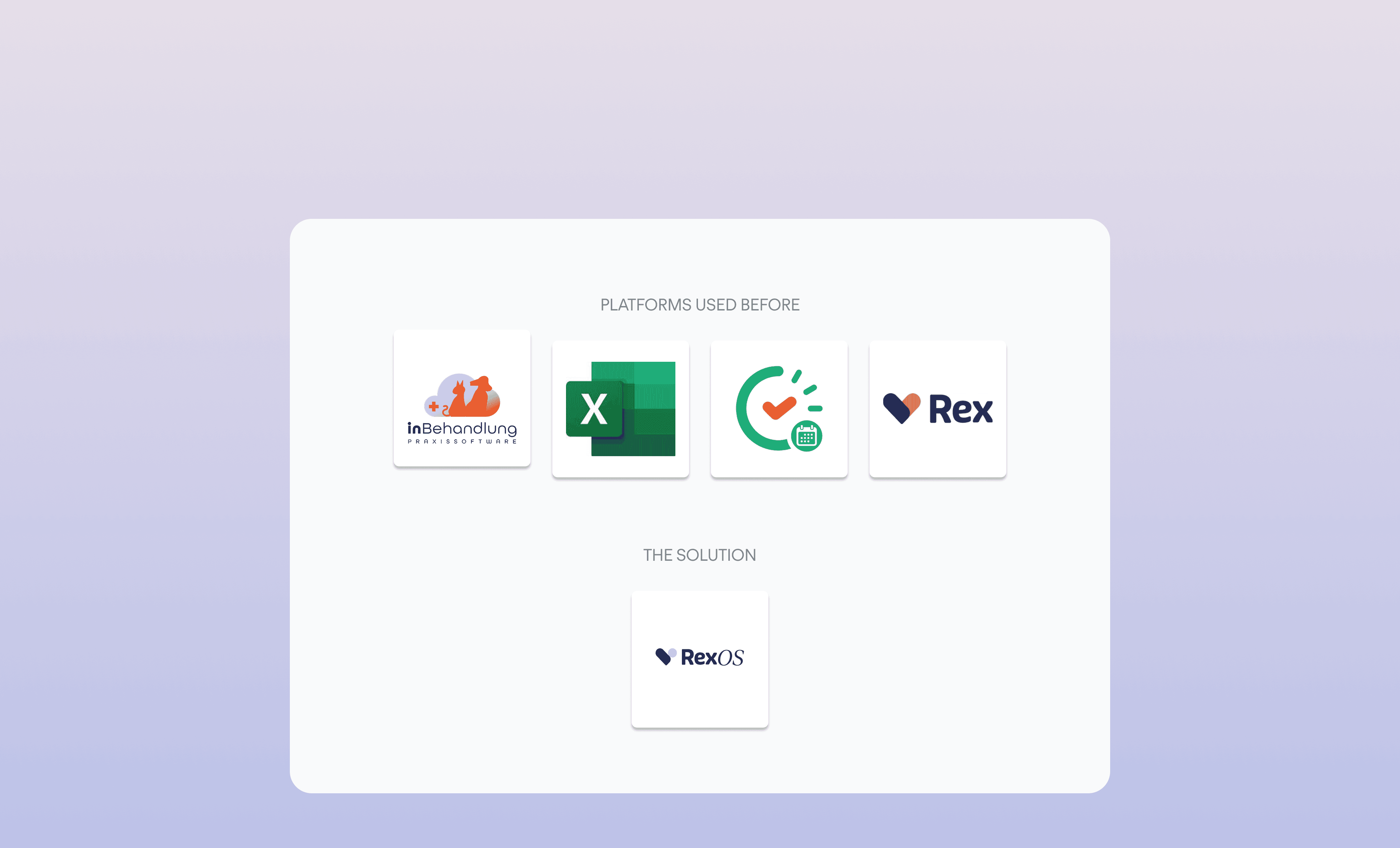
At Rex, a rapidly scaling digital-first veterinary care chain, I led the design of an integrated B2B operations platform that replaced five fragmented tools—appointment, data management, patient records, and staff coordination—with a unified workflow operating system.
Collaborating directly with the co-founder/CEO, a team of 3 engineers, and clinic staff during a high-pressure 4-week sprint, I delivered a solution that eliminated 30+ minutes of daily context switching per team member and increased appointment booking accuracy from 78% to 96%, directly supporting Rex's aggressive expansion goals.
The Challenge & Industry Context
When Rex launched, we discovered that veterinary teams were juggling multiple disconnected tool - Excel sheets, outdated patient software, paper notes, and endless phone calls for coordinating clinic activities. In an already high-stress industry, this wasted 30+ minutes per person each day through context switching and caused booking conflicts that hurt revenue. So we set out to change that.
Pet adoption surged during COVID in Germany, overwhelming an industry where veterinarians already faced higher stress levels than many professions due to the emotional nature of animal care, making workflow efficiency crucial for both business success and team wellbeing.
Research & Discovery
Competitive Analysis
I researched existing veterinary management systems and found they were either outdated, inflexible, or focused on single use cases. Most importantly, I spoke with players in adjacent industries (healthcare startups, service businesses) and discovered that they had successfully built unified solutions in-house rather than cobbling together multiple vendors.
User Research
- Working with limited time and access, we conducted research through:
- Direct observation in Rex clinics, watching staff switch between tools
- Interviews with veterinarians, TFAs, and practice managers
- Deep insights from the co-founder's industry expertise
Key Insight: The constant context switching wasn't just inefficient—it was a major contributor to daily stress in an already emotionally demanding job.
Design Process
Information Architecture Challenge
The biggest challenge was organizing complex, interconnected data for three distinct user types:
Veterinarians & TFAs: Needed appointment calendar, patient records, daily notes
Practice Managers: Required all above features plus shift planning capabilities
Central Team: Needed analytics and performance monitoring
Key design decisions
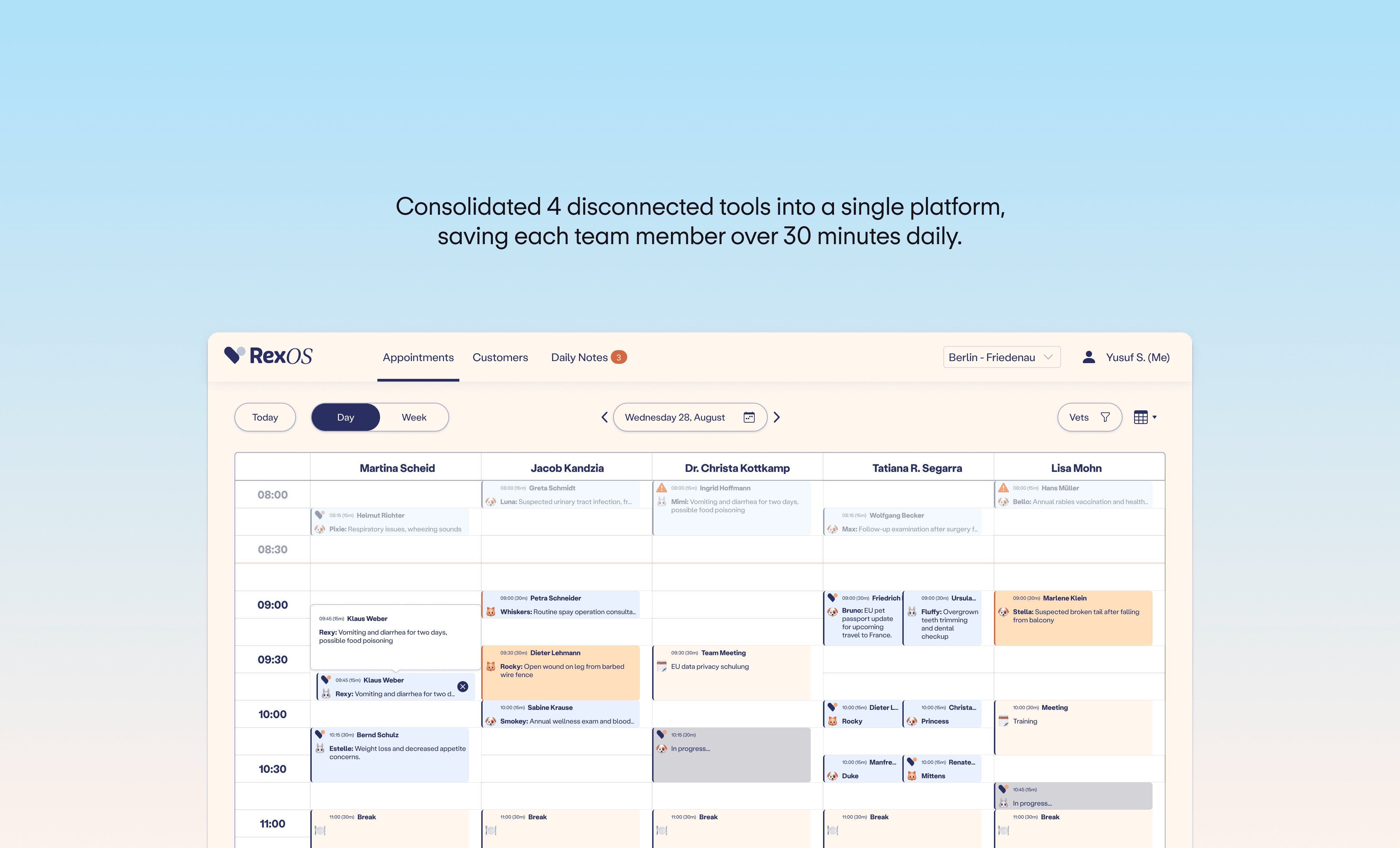
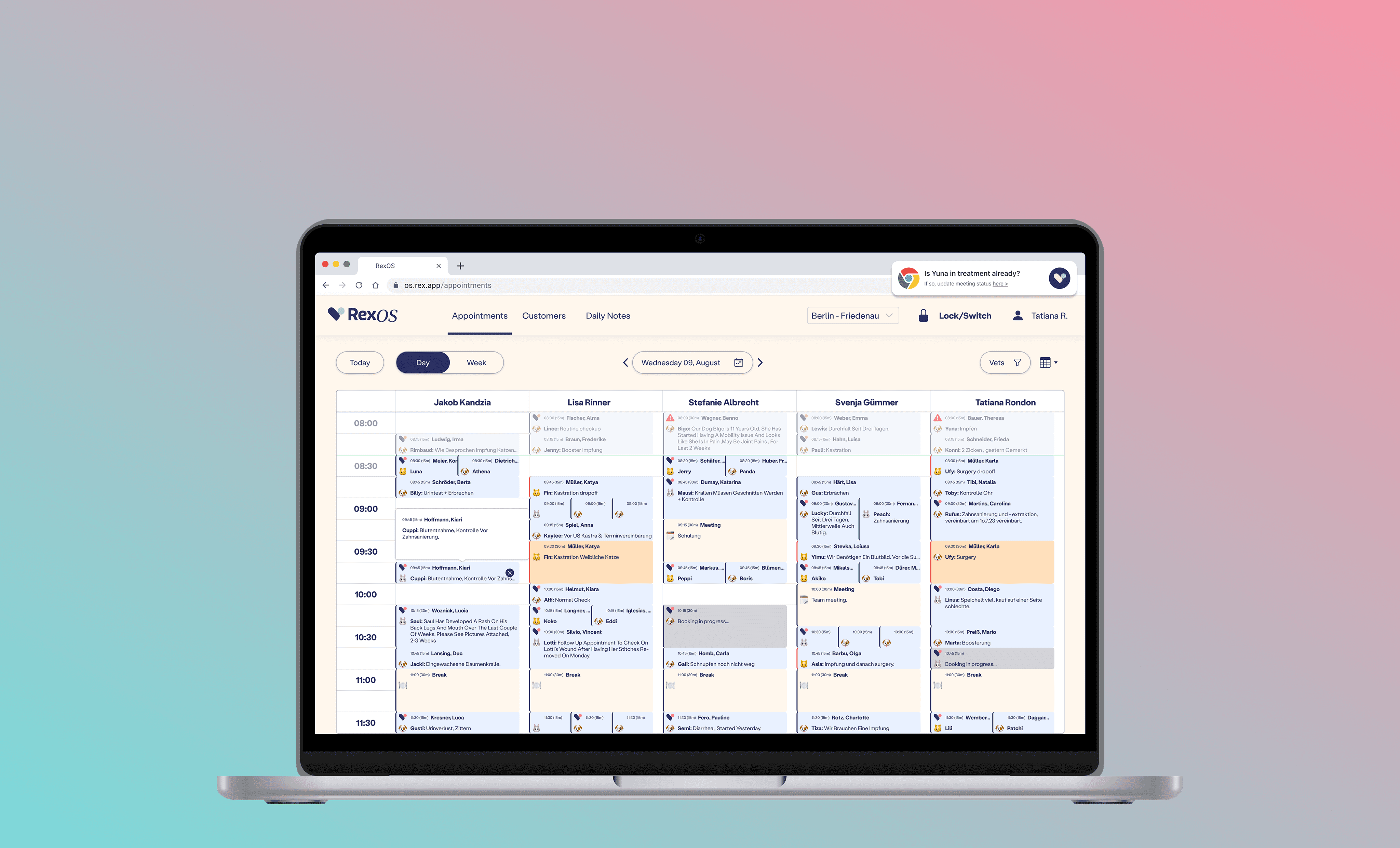
1. Unified Calendar System
Instead of separate booking and scheduling tools, I designed two synchronized views:
- Appointment View: Shows patient bookings and availability
- Shift Planning View: Manages staff schedules and capacity
Why this worked: Appointment availability automatically reflected staff scheduling, eliminating double-booking while enabling real-time conflict resolution.
2. Role-Based Permissions
I implemented a tiered access system that showed the same data with different capabilities:
- All users see the same core information (transparency)
- Permission levels determine what actions they can take
- Reduced cognitive load by hiding irrelevant features per role
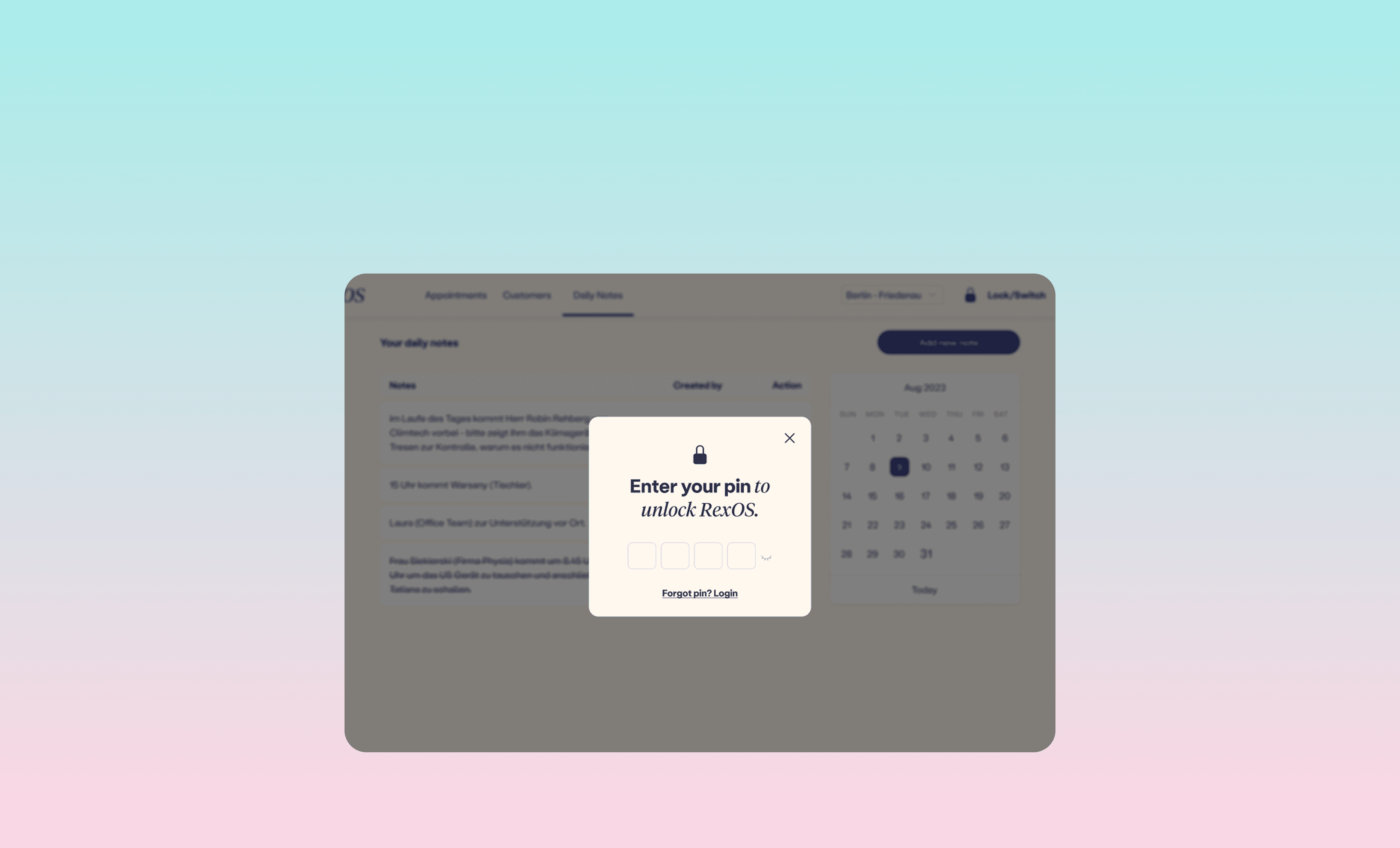
3. PIN-Based Quick Access
For receptionists sharing workstations, I designed a PIN system replacing full login/logout:
- Multiple staff members could quickly access their work without full authentication
- Protected individual work sessions
- Dramatically reduced transition time between shifts
The Solution: A Unified Platform
The final solution was a comprehensive dashboard that consolidated all clinic operations:
- Appointment Calendar: Real-time booking with conflict prevention
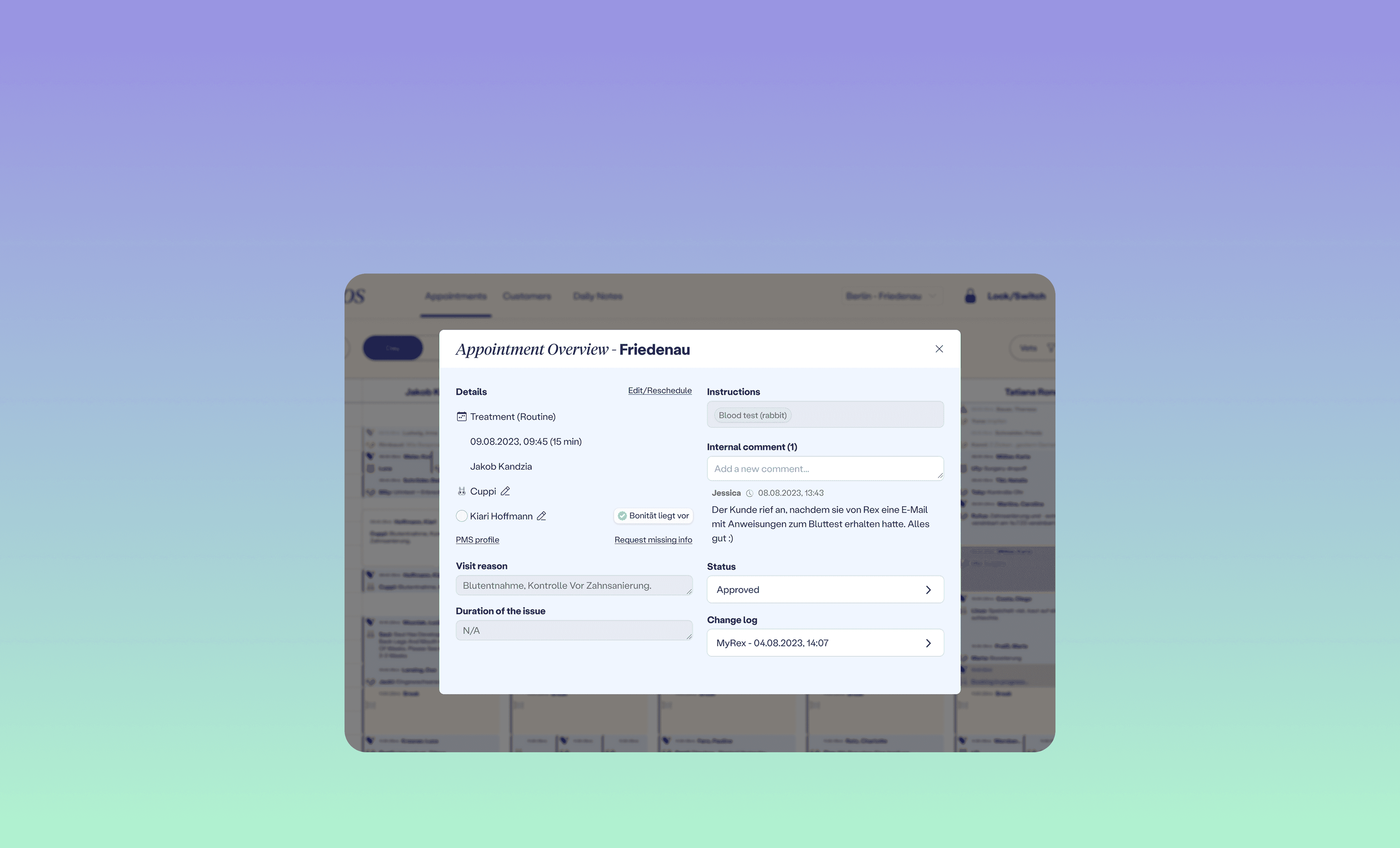
- Patient Management: Digital records with quick access to medical histories
- Daily Notes & Tasks: Digital assignment system with shift handoffs
- Shift Planning: Staff scheduling synced with appointment availability
- Analytics Dashboard: Performance monitoring for managers
What I learned
Systems Design at Scale: This project taught me the power of unified data architecture. Rather than optimizing individual workflows, solving the underlying information fragmentation created exponential improvements across all touchpoints.
Industry-Specific Design: Working in veterinary care showed me how emotional context affects digital tool design. In high-stress, emotionally charged environments, reducing cognitive load isn't just about efficiency—it's about human wellbeing.
Compliance as Design Constraint: EU data regulations didn't just affect backend architecture—they influenced UX decisions around data access, retention notifications, and user permissions in meaningful ways.
To keep exploring, go to my other case studies.